

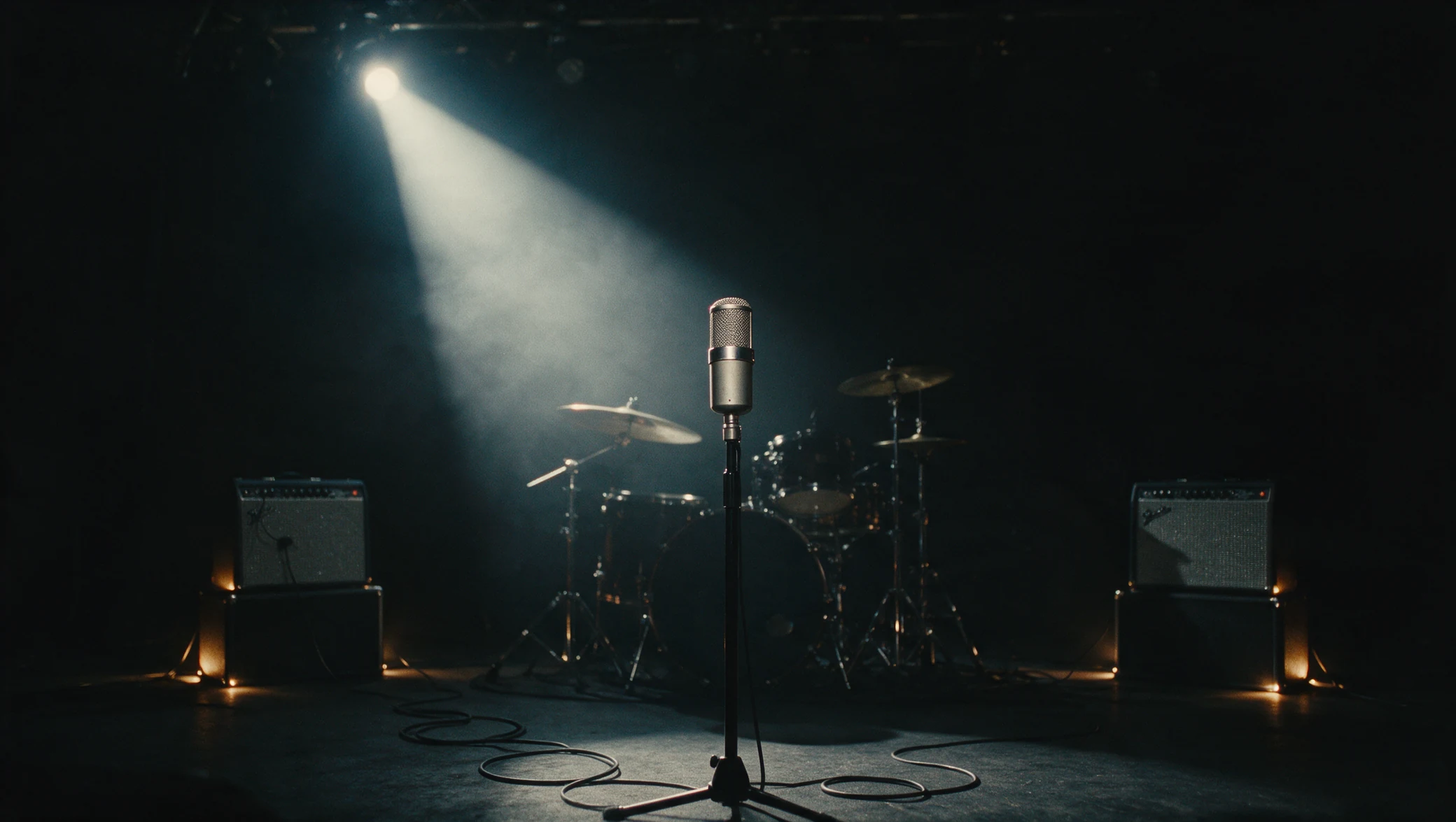
Branding is the new band management
Brands today aren't just businesses; they are performers. What does a music band have in common with a modern brand of the 21st century? Well, they both have their fans, voices, and identities that people follow.
Most modern brands look great, but do they sound great — or, even better question, do they want to be heard again? It is still today often the case that brands sound inconsistent or anonymous. Bands, on the other hand, mostly take care of their visual image as a part of their identity — with their sound being the core of their identity.
In our noisy world, it is our due diligence to give voice to our brand – it is nothing new or groundbreaking, but many brands, unfortunately, miss the point.
Coming from a perspective of a musician and a music producer, I thought to myself: What if we thought about brands in the sense we think about bands? Could that advance our thinking about your brand and its identity? What if your brand were a band? Would you want to hear it?
I'd like to propose a musical framework that helps you think of your brand like a band — during or after the branding process. It's designed to help you sound more authentic, communicate your values clearly, and shift how you perceive your brand at every touchpoint.
1. Core Philosophy
The core philosophy of this musical framework is based on the teachings from a few of the most respected audio branding experts in the field, such as John Groves (“Commusication”, 2012), Joel Beckerman (“The Sonic Boom: How Sound Transforms the Way We Think, Feel and Buy”, 2014), and Colleen Fahey and Laurence Minsky (“Audio Branding: Using Sound to Build Your Brand”, 2017) and can be put into the following statement:
2. The emotional nature of sound
As bands, brands of the 21st century need to communicate emotionally, memorably, and multidimensionally across every touchpoint. John Groves emphasizes this in Commusication, where he writes that modern branding must move beyond communication to “emotional positioning via musical expression” (Groves, 2012). We now know how sound and music get to our emotions and what they do. Scientific research backs this up. In a 2024 study, Dogaru et al. showed that sad background music significantly boosts brand recognition, while happy music increases purchase intent — even when the ad visuals remain identical.
3. Sonically aligned with brand values
Just as the band Rage Against the Machine's sonic identity is perfectly aligned with the values being represented by them, so should brand values also be sonically presented — but not as an external part of the branding process, rather as an internal part of the brand's identity. This process should be carefully thought out and be based on research (Minsky & Fahey, 2017).
Just imagine if the band “Rage Against the Machine”'s guitar player, Tom Morello's guitar sound, was coming out of a small 4-string acoustic ukulele without any effects or distortion, and then think of this kind of sound being used in their cult song “Killing In the Name Of”. Of course, it wouldn't reflect their values and their message in an appropriate way.
Your brand is subconsciously sending messages every time it is heard. It is, therefore, of great importance that the emotional signals you are sending align with the brand values, identify and differentiate your brand “persona” (Minsky & Fahey, 2017) in a world full of loud voices speaking at every possible touchpoint in every possible moment of our day.
4. Structure, not just style
There is a deep structure behind every band: the lead singer, the rhythm section, a producer, a songwriter, a manager, and so on… Similarly, a successful brand has a layered sonic architecture: lead sound elements (sonic logo & brand anthem), rhythm (cadence of communication), supporting textures (event music, telephone loop, UX/UI sounds…), and dynamics (touchpoint-specific usage). As a band modifies its set list and dynamics according to the audience or venue, so too must the brand sound consistent across various emotional or situational settings, which is also explained by Beckerman's concept of “contextual sound” (Beckerman, 2014).
5. Cultural Relevance and Emotional Consistency: The Common Heritage of Great Bands & Brands
Let's think about great bands: The Beatles, U2, Daft Punk, Nirvana, Radiohead, or even great artists like Miles Davis, Michael Jackson, or Kendrick Lamar. They all evolved, but their emotional space stayed the same over time, which enabled their fans to be able to connect with them and even grow together in their artistic changes over time. Consistency should always top repetition, which is often misunderstood as the same. A brand should always feel the same, reflecting its values.
There is no better medium than audio for this job, because our hearing is the fastest sense, and therefore it takes the shortest amount of time to engage someone emotionally with your brand. If we speak of pioneers of brands that stayed consistent and flexible over time and throughout different cultures, we should definitely mention McDonald's, Coca-Cola's, or Intel's brand sound strategy.
6. It all starts with a sound wave
If you are still reading this, chances are this made you think a little differently about how your brand sounds. So I will ask again:
Would I like to hear this b(r)and again? And if so, why?
As Minsky & Fahey (2017) argue, real audio branding creates an entire audio language out of a brand's essence. That's exactly what my framework is designed to help you with. It's a simple, musical tool that helps you think of your brand like a band — from lead voice to rhythm section. Whether you're in the middle of branding or just trying to sound more authentic across touchpoints, this tool offers a fresh perspective and a creative way to bring your values to life through sound.
I'd be happy to send it to you — free of charge. And I'd love to hear your thoughts, too. Let's talk about how your brand can sound like itself — or better yet, like a great band.
Sources
- Beckerman, J. and Gray, T. (2014). The Sonic Boom. HMH.
- Groves, J. (2012). Commusication. Oak Tree Press (Ireland).
- Dogaru, I., Furnham, A. and McClelland, A. (2024). Understanding how the presence of music in advertisements influences consumer behaviour.
- Minsky, L. and Fahey, C. (2017). Audio branding: using sound to build your brand. London: Kogan Page Limited.